
Broomfield City Directory Holdings
Broomfield does not have one uninterrupted city directory run. The strongest local object is the Spring 1960 Broomfield Telephone Directory. Selected Library of Congress telephone books cover 1944 through 1974. The National Archives directory table places Broomfield inside Boulder listings for 1926, 1928, 1930, and 1932. Denver Public Library supplies a broad regional city-directory and criss-cross shelf, and Broomfield's library and History Collections add newspapers, objects, and item-level catalog entries.
| Collection | Years or run | Where held | Access |
|---|---|---|---|
| Broomfield Telephone Directory | Spring 1960 | Broomfield History Collections, CatalogIt | Catalog record; physical object |
| LOC Broomfield telephone books | 1944, 1945, 1946, 1948, 1950, 1958, 1960, 1970, 1974 | Library of Congress | Selected digital scans and text |
| Boulder-area directory references | 1926, 1928, 1930, 1932 | National Archives directory table | Locality lead; pages need checking |
| Colorado directory index | Municipality, county, and year index | Denver Public Library | Searchable index, updated quarterly |
| Denver city directories | 1866-1981 microfilm; 1873-1923 digital subset | Denver Public Library | Verify Broomfield pages first |
| Denver criss-cross volumes | 1924-2018; 1924-1937 digital subset | Denver Public Library | Address-to-occupant method |
| Broomfield Enterprise | 1999-present or historic archive route | Broomfield Public Library | Library database access varies |
| Colorado Historic Newspapers Collection | 1859-1923 statewide | Library-linked CHNC | Search local notices and obituaries |
| Broomfield History Collections | 1800s-present, item-specific | 6 Garden Center and CatalogIt | Object-level catalog and researcher route |
The gaps are part of the evidence. A missing year may reflect a regional publication, an unverified locality, an absent scan, or a source that was never found. Cite the volume, publisher, locality, page, and access route rather than describing the shelf as complete.
Spring 1960 Broomfield City Directory
The clearest local city directory object is cataloged as “Broomfield Telephone Directory, Spring 1960.” Mountain States Telephone & Telegraph published the 6 by 9 inch stapled booklet. Broomfield History Collections gives it object ID 2016.2.3 and says the locality scope includes Broomfield, Broomfield Heights, and East Lake residents and businesses.
A telephone book is a resident clue with a narrow meaning. A white-pages entry normally gives surname or household name, street address, and telephone number. Business and institution headings may be separate. One number may serve a household, and an unlisted number may leave no trace. Spouse, trade, owner, or household-member details should not be assumed unless the actual volume shows them.
The Spring 1960 CatalogIt record is the citable object route.
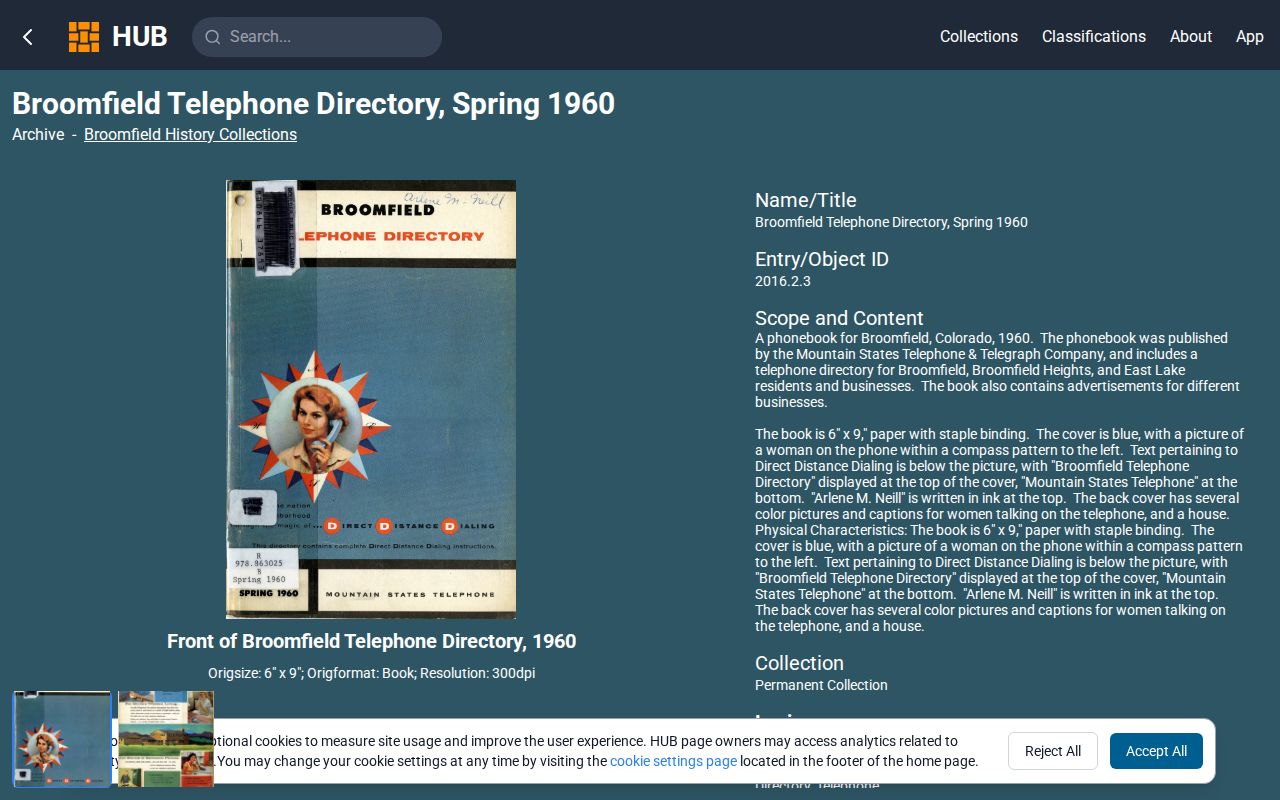
The catalog screenshot identifies the local booklet even when a complete page image is not exposed in the record.
Broomfield Directory Library and History Collections
Broomfield Public Library is the practical starting point for the local history layer. Its online resources link to the Colorado Historic Newspapers Collection, Broomfield Enterprise, Denver Post, Ancestry Library Edition, MyHeritage, History Reference Center, America’s News, Newspaper Source, and museum material. Database authentication varies by site, library card, or on-site access.
Broomfield History Collections is at 6 Garden Center, and the Depot Museum is at 2201 W. 10th Avenue. The catalog can surface a directory, photograph, family report, or object by name or topic. A March 6, 2013 Vaughan family and Broomfield Depot genealogy report is a concrete example of the local preference for combining census, directories, newspapers, the Denver Public Library, and World War I draft registrations.
Broomfield History Collections gives the catalog and researcher route.
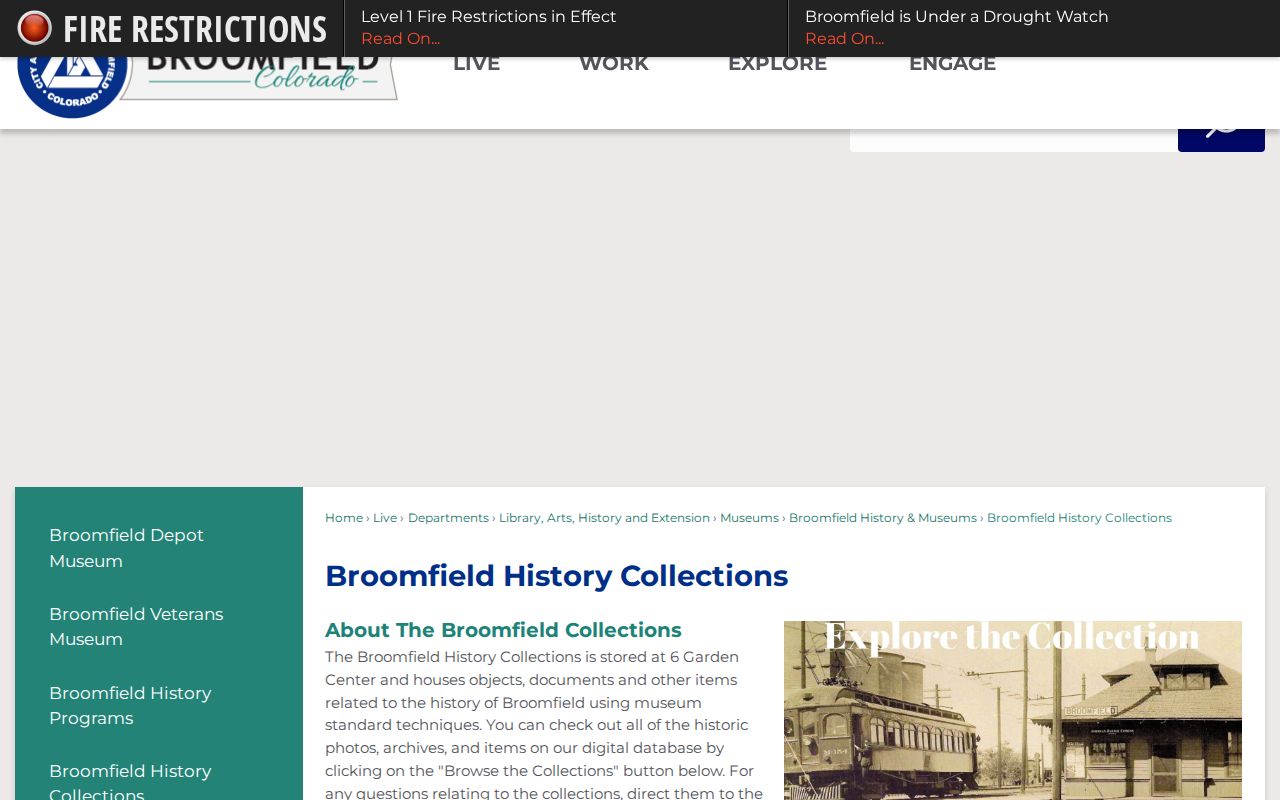
The History Collections image shows why an object catalog can matter as much as a standard city directory search for a family or place question.
The library's institutional history also helps locate older material. A first library meeting was held in 1959, the board formed in 1960, a permanent Garden Center building opened in 1963, another library opened in 1995, and the current facility dates to 2001. Those moves can explain why a cataloged object is held away from the shelf a researcher first expects.
Earlier Broomfield City Directory Volumes
Before Broomfield became a county, local records used broader county and locality labels. The National Archives city-directory table identifies Broomfield in Boulder directory entries for 1926, 1928, 1930, and 1932. The exact publisher and page range were not located, so the table is a lead rather than a claim that every Broomfield household appears in each volume.
Use the locality field, street spelling, township or county label, and year together. A modern Broomfield address may be cataloged under Boulder while a deed belongs to Adams, Boulder, Jefferson, or Weld. Census schedules follow the geography of their own year. That is why a city directory search needs the historical place name in addition to the present one.
The National Archives directory table supplies the older Boulder-area lead.
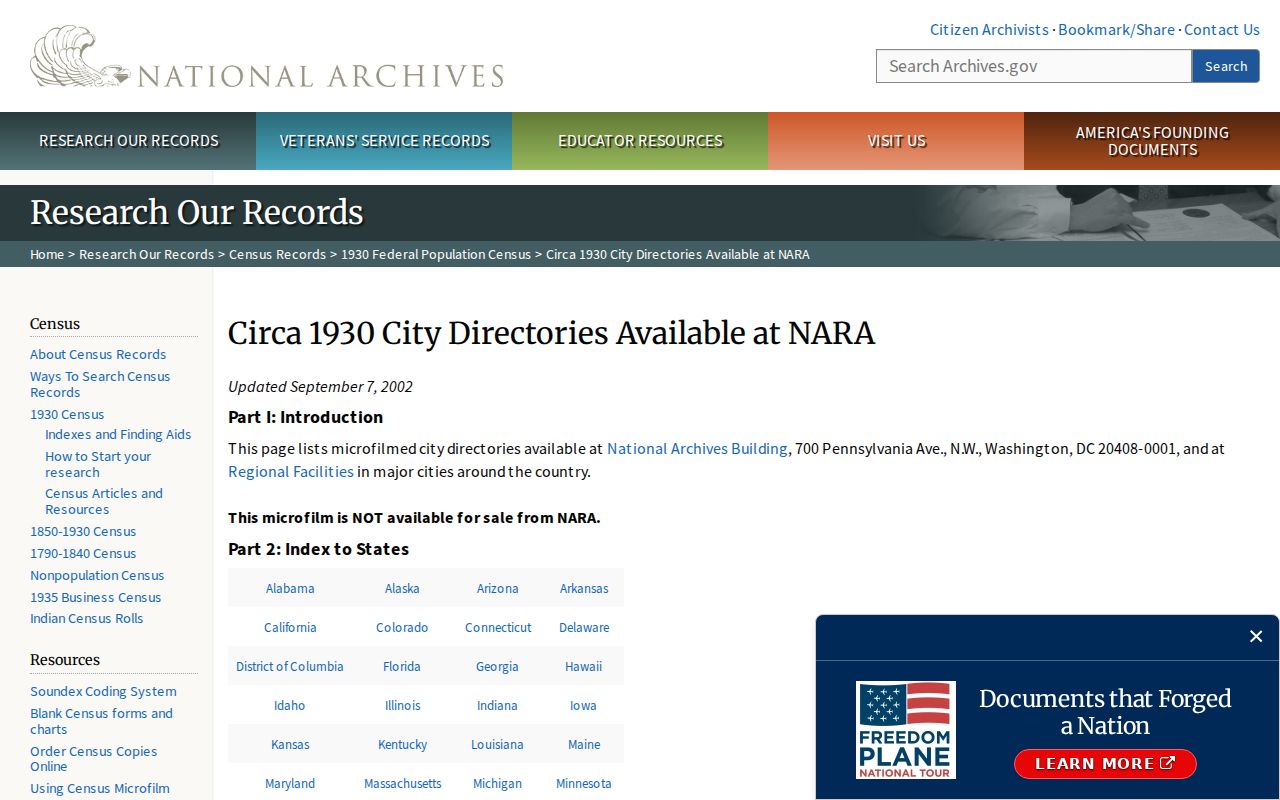
The archive image is useful for the jurisdiction check: a directory location can sit inside a larger regional volume.
Inside a Broomfield Directory Entry
Read the exact page before importing assumptions from a different publisher. A true city directory may include a household name, a trade or occupation line, a spouse or widow notation, and an address. A telephone book usually offers a subscriber name, address, and number. A criss-cross section changes the order to street, number, and occupant or subscriber.
| Name | Record surname, given name, initials, spelling variants, and any household label. |
|---|---|
| Trade line | Copy the printed occupation or business wording only when the volume actually displays it. |
| Address | Preserve house number, street suffix, direction, apartment or unit, and locality heading. |
| Household note | Spouse, widow, or relationship wording can be a genealogy clue, not a complete household list. |
| Subscriber number | Telephone exchange and number identify a listed line, not every person who used it. |
- Criss-cross directory
- An address-first directory that lists a street and number before an occupant or subscriber.
- Householder index
- A name-oriented index that helps locate a head of household or primary listing.
- Abbreviation key
- The volume's own explanation of short forms and symbols; photograph or transcribe it before reading entries.
A directory entry places a person or household in a source at a date. It does not certify current residence, prove every occupant, or override a restricted record.
Broomfield City Directory Criss-Cross by Address
Denver Public Library's criss-cross volumes are the historical answer to a street-first question. The broad run reaches from 1924 to 2018, with a digital 1924 to 1937 subset. Search the street and house number, then copy the occupant, subscriber, business, or institution entry. Check the front matter and locality pages to confirm that Broomfield is included in the volume.
Criss-cross work pairs well with the Spring 1960 telephone book and the Library of Congress runs. It can fill the gap between a deed and a census, but the result is still a dated directory clue. A person can move, use an unlisted number, share a line, or appear under a different spelling.
The Colorado directories index helps identify municipality, county, and year before a researcher spends time in a volume.
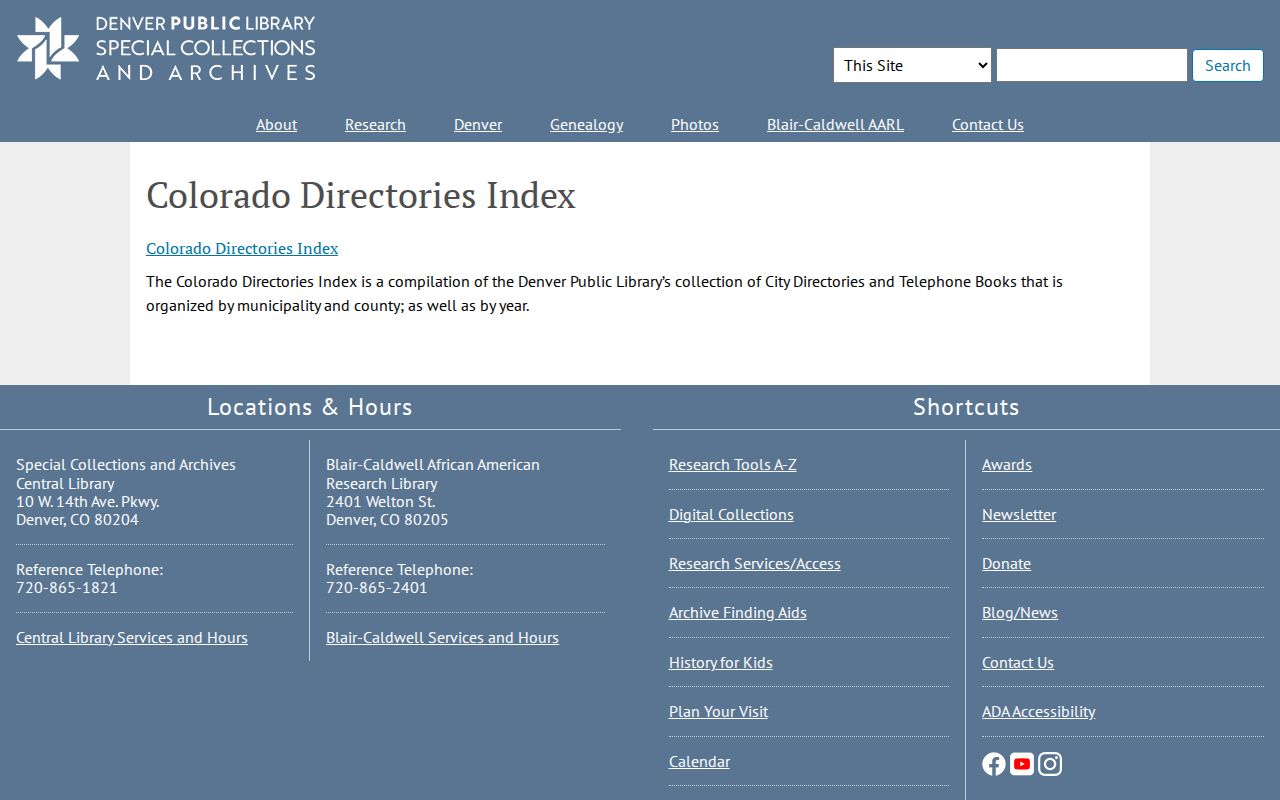
The index image demonstrates the regional-shelf problem: Broomfield may appear under a broader municipality or county entry.
Broomfield Directory Newspapers and Obituary Leads
Newspapers give a city directory search a human event trail. The Colorado Historic Newspapers Collection reaches Colorado titles through 1923. Broomfield Enterprise routes cover 1999 to the present or historic archive material, and the library also lists Denver Post and general newspaper databases. Search social columns, school notices, civic meetings, marriage and death notices, reunions, and address clues.
Record the title, publication date, page, and stable link or database label. An obituary may name relatives, a former address, cemetery, funeral home, or a service date. It is a published lead, not a certified death record. Newspaper absence is not evidence that a person was absent from Broomfield.
Broomfield's newspaper route identifies current access paths and authentication limits.
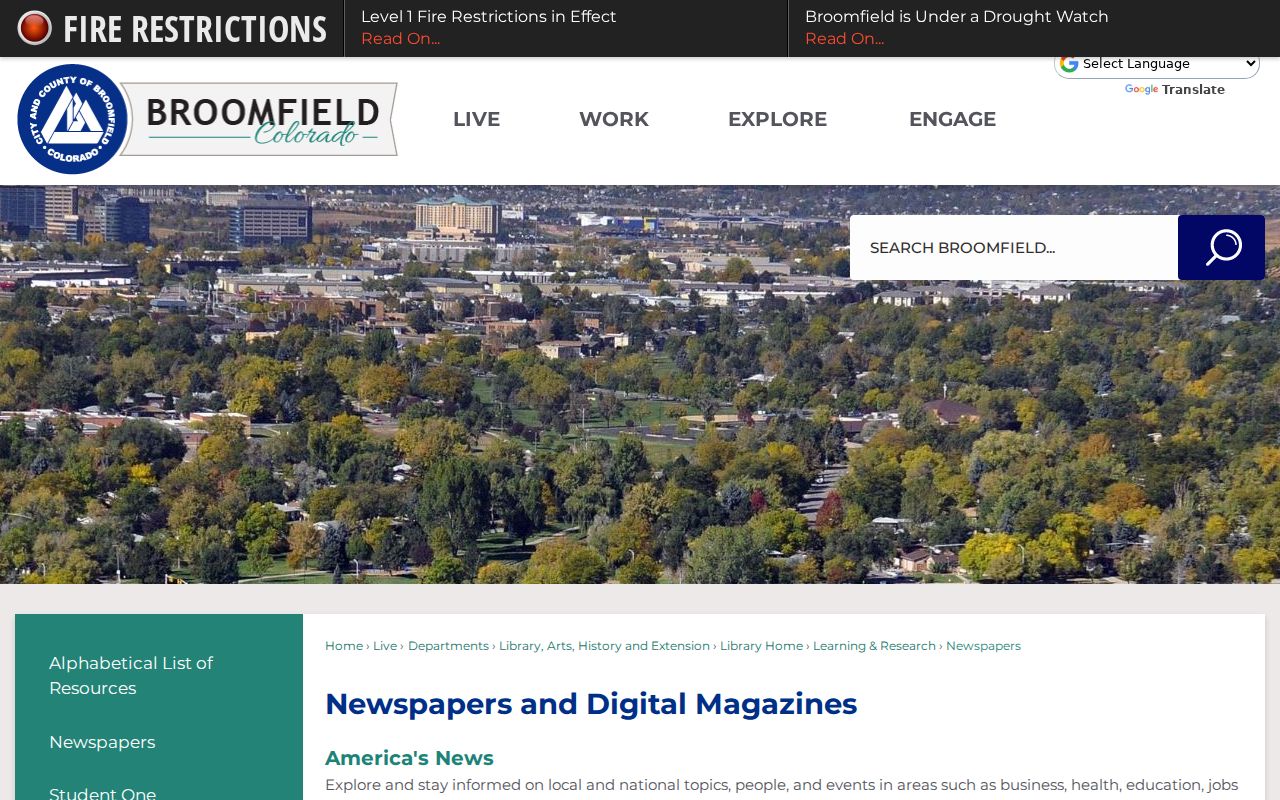
The newspaper image belongs with the notice-search method because a short published item can point to a directory, cemetery, or court record that needs separate confirmation.
Trace Broomfield City Directory Households
A Broomfield city directory becomes much stronger when its years are paired rather than read in isolation. Start with the first known name and address. Normalize initials, surname variants, street suffixes, and locality names. Then compare the next available directory, a census year, a deed or tax transfer, and a newspaper or cemetery clue. A gap should be described, not silently filled.
- Find the earliest directory or telephone listing that matches the name, street, and locality.
- Follow the name forward and record every address, spelling, number, household note, and volume.
- Flip to a criss-cross section to test the same address even when a name is missing.
- Pair the directory date with a federal census, deed, permit, obituary, or probate date.
- Use a cemetery or museum source to close the historical trail, then check any modern record separately.
The 1950 census is available under the 72-year release rule, while earlier schedules can show household members, age, birthplace, and broad occupation categories. Directory years bridge gaps between census decades. A Boulder label in 1930 can still describe a locality that is now Broomfield.
When the goal becomes a current named-person confirmation, move to the Broomfield resident lookup workflow instead of rebuilding the historical shelf.
Broomfield Directory Cemetery Eras
Cemetery records supply a useful companion to Broomfield city directories. Lakeview Cemetery's earliest burial is October 1888, the cemetery association was incorporated in 1890, traditional burials ended in 1954, and cremation interments began in 1992. County Commons Cemetery begins a newer municipal phase in 2003, with a second phase completed in 2018 and a veterans area.
No complete public name-search index was located. City staff and volunteer records may contain a name, age, death date, lot, block, memorial, and sometimes cause, but confirmation should come from the cemetery route. A death notice can point to a lot or service; the cemetery can verify the interment.
| Older Broomfield | Lakeview, with burial history reaching to October 1888. |
|---|---|
| Mid-century transition | Traditional burials continued through 1954; directory and newspaper sources can bridge the period. |
| Modern municipal era | County Commons first phase in 2003 and Phase 2 in 2018. |
- 1888: Lakeview records begin with the earliest burial identified in the research.
- 1954: Traditional Lakeview burials end, leaving directory, newspaper, and family sources to bridge later history.
- 2003 and 2018: County Commons enters its first municipal phase and then adds Phase 2.
Broomfield Directory Gaps and Boundaries
Every Broomfield city directory result needs a locality and jurisdiction check. The present city and county began on November 15, 2001, after territory from Adams, Boulder, Jefferson, and Weld. A pre-2001 deed may be held by a former county. A census schedule uses its historical county or township. A regional directory may place Broomfield under Boulder. A ZIP is a modern postal clue and may not exist in an older volume.
When a name disappears, test the street-first section, alternate spelling, adjacent year, newspaper, cemetery, deed, and former county. Do not turn an unverified publisher or missing scan into a coverage claim. The strongest citation names the collection, year, locality, page, object ID or call path, and access condition.
Note: The most reliable historical directory trail pairs one directory entry with one independent dated source and preserves the gap between them.